How Much Does a Bathroom Renovation Cost in Quebec?
Would you like to replace your bathtub with a more comfortable shower, add storage or completely redesign your bathroom? Before choosing tile and faucets, one question almost always comes up: how much should you budget?
The cost of a bathroom renovation depends as much on the work required as on the materials you choose. Two rooms of similar size can require very different budgets if one keeps its existing layout while the other involves moving plumbing, rebuilding the shower and installing custom cabinetry.
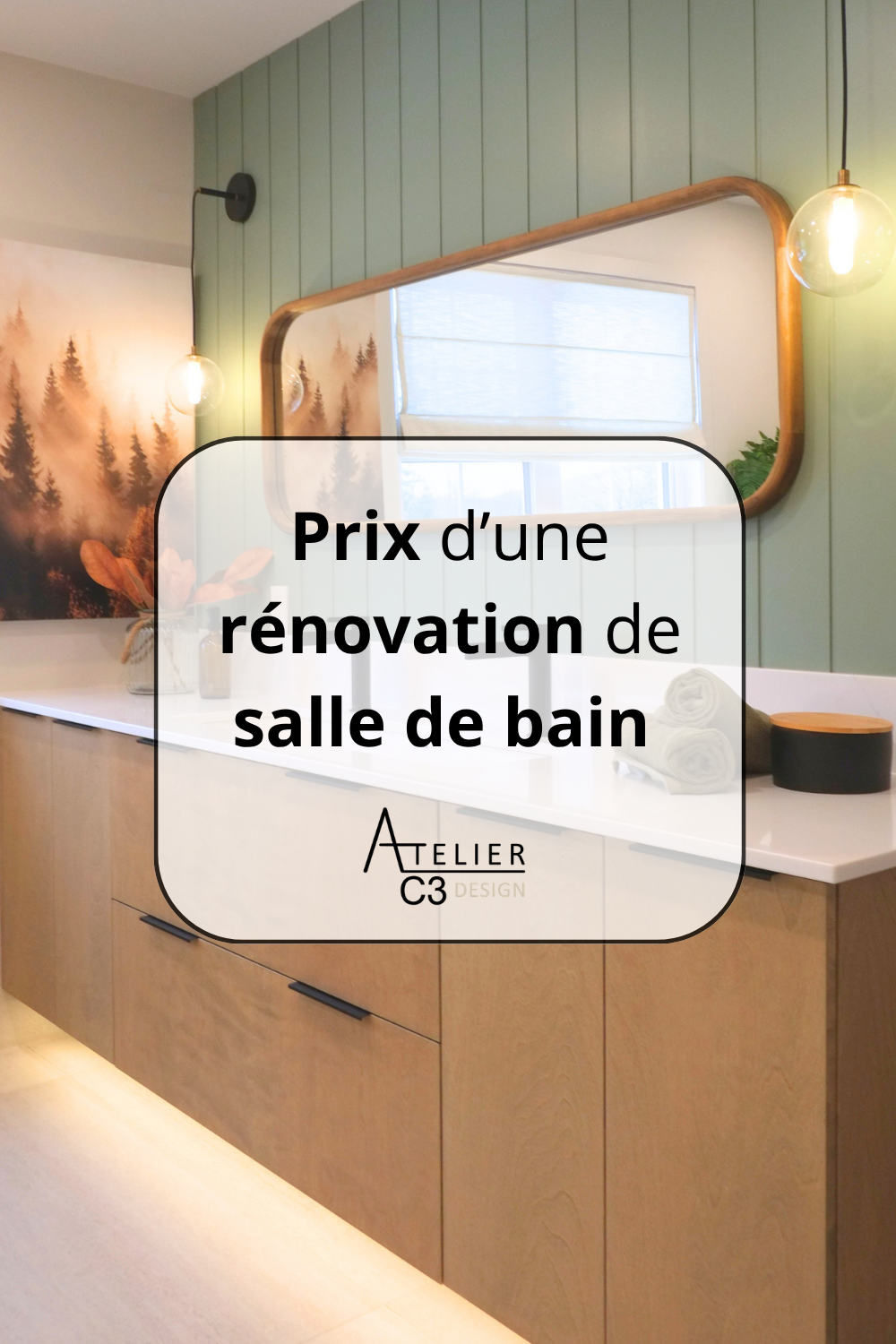
To give you a sense of pricing, a contractor in the Quebec City area lists a range of $30,000 to $100,000 for a complete renovation, depending on materials and the scope of work. This is a benchmark published by that contractor, rather than an official average that applies to every bathroom. Particularly complex or customized projects may exceed this budget.
To set your own budget, it helps to understand where the money goes and which choices affect the final cost. Here are the main expenses to consider when planning a project that meets your needs.
What affects the cost of a bathroom renovation?
A bathroom renovation brings several trades together in what can be a small space. Demolition, plumbing, electrical work, surface finishes, cabinetry and finishing details all need to be coordinated.
Floor area matters, but it does not tell the whole story. A small bathroom with a fully customized shower and hard-to-access plumbing can cost more than a larger room that keeps its existing layout.
Before you begin, take time to identify what works and what bothers you about your current bathroom. Do you need more storage? Do you actually use the bathtub? Is the shower too narrow? Does the lighting at the mirror meet your needs?
Your answers will help you focus your budget on changes that improve your daily life, rather than automatically replacing everything in the room.
Bathroom renovation cost no. 1: Plumbing and electrical rough-ins
Rough-in work prepares the systems before the walls are closed up and finishes are installed. In a bathroom, this includes water supply lines, drains and electrical installations.
This part of the project is not very visible once the work has been completed, but it can represent a significant expense.
Moving fixtures affects the budget
Moving a toilet, shower or sink means checking how the new fixtures can be connected. Depending on the house’s layout, it may be necessary to open the floor, walls or ceiling of the room below. A basement bathroom can present different constraints, particularly when drains run through the concrete slab.
Keeping fixtures in their current locations can help reduce the work required. However, this does not mean keeping an awkward layout just to save money. If moving a fixture significantly improves circulation or creates the storage you need, it is worth considering.
Plan electrical needs during the design stage
Heated floors, new outlets, an illuminated mirror and lighting changes should all be planned before finishing work begins. Think about your routine: where do you use your hair dryer? Where do you charge your toothbrush? Is the lighting comfortable when you get ready in the morning? Planning these details at the right time helps coordinate electrical work with the cabinetry and avoids changes after the walls are closed up.
Bathroom renovation cost no. 2: Floor and wall coverings
Ceramic and porcelain tile often play a major role in bathroom design. They add character, but their purchase price is only part of the expense. When comparing options, consider the material, the area to be covered, substrate preparation and installation complexity. Materials can cost approximately $5 to $30 per square foot, excluding installation.

Tile size and pattern affect installation
A straight layout, a herringbone pattern, mosaics and very large tiles each require different work. Cuts, grout-line alignment, corners and details around niches can affect installation time. A less expensive tile is therefore not always the most affordable option once installed. Ask for an estimate that separates materials from labour so you can compare the actual cost of each option.
Choose which surfaces to highlight
You do not need to tile every wall to create a harmonious bathroom. Depending on the layout, you can use a distinctive tile in the shower or behind the vanity and choose suitable paint elsewhere. This approach adds character while keeping material quantities and installation work under control. Think about maintenance too: grout lines, texture and surface finishes will affect your cleaning routine. A beautiful material should also suit your lifestyle.
Bathroom renovation cost no. 3: Painting and finishing work
Painting generally costs less than plumbing or the shower, but it brings the room together. Its cost depends on the condition of the walls, the preparation required, the ceiling and how much work you hire a professional to do.
Preparation matters as much as colour
After demolition or the removal of old finishes, some surfaces may need repairs, drywall joint finishing and primer before painting. Choose a paint that the manufacturer recommends for the conditions in your bathroom. Suitable paint does not replace effective ventilation or fixing a moisture problem. To choose a colour, view it alongside your tile samples, cabinetry and planned lighting. A white can look warm next to one material and much cooler next to another. These simple checks help create a cohesive result before you purchase all the products.
Bathroom renovation cost no. 4: Fixtures and faucets
Bathroom fixtures can account for a significant portion of the budget. Prices vary considerably depending on dimensions, materials, features and the level of customization.
To make sure nothing is overlooked, prepare a complete list:
- The toilet;
- The sink or sinks;
- Sink faucets;
- The shower base;
- The shower door and panels;
- Shower faucets and their components;
- The bathtub;
- The bathtub faucet;
- Accessories required for installation.

Compare complete packages
An advertised price does not always include everything you need. One vanity may come with a countertop and sink, while another includes only the cabinet. The same care is needed with faucets. Confirm which components are included, which must be purchased separately and whether they are compatible with the planned installation. Looking only at the main product price can give a misleading impression of the final cost.
Invest according to your habits
If you rarely take baths, a statement bathtub may not be your priority. If bathing is part of your family routine, however, comfort and maintenance deserve careful thought. For the shower, consider the available space, access, product storage and ease of cleaning. A larger shower is not automatically more practical if it makes moving around the rest of the room difficult. The right fixtures meet your needs and fit the overall project.
Bathroom renovation cost no. 5: Custom or prefabricated cabinetry
The vanity shapes both the look and functionality of the bathroom. It often holds the personal care products, towels and accessories you use every day. The choice between prefabricated and custom cabinetry depends on your budget as well as the room’s layout.
Prefabricated cabinetry: an option to compare carefully ($1,000 to $10,000)
Prefabricated cabinetry comes in standard sizes and configurations. It can be an economical option when its proportions suit your space. Before choosing, check the cabinet depth, drawer clearance, space required for plumbing and what is included. A model that looks appealing in a photo may offer less usable storage than expected. A cabinet that is too deep can also make the walkway uncomfortable. Compare equivalent packages, including the cabinet, countertop, sink, delivery and installation, depending on what each supplier offers.

Custom cabinetry: investing in a tailored solution ($7,000 and up)
Custom cabinetry lets you adapt dimensions, storage and finishes to the specific needs of your project. It can help make the most of an alcove, incorporate a linen cabinet, adjust vanity depth or coordinate several elements in the room. Its cost depends on the overall design: a small vanity cannot be compared with a layout that includes a vanity, countertop and full-height storage. At Atelier C3 Design, we approach custom cabinetry based on your habits and storage needs. The goal is to design a functional, welcoming space that fits your everyday life.
Bathroom renovation cost no. 6: Labour — hire a contractor or do it yourself?
Hiring a contractor for the entire renovation lets you delegate much of the work and coordination. This project management is part of the budget. When comparing quotes, review the tasks included: demolition, debris removal, surface preparation, equipment installation, finishing and cleanup. A lower quote may simply cover less work.
Doing some tasks yourself
Painting or some finishing tasks may be manageable if you have the skills, tools and time. However, you also need to consider coordination. A task that takes longer than expected can delay the next trade, and a mistake may require rework. For shower waterproofing or complex tile installation, honestly assess your experience before deciding to do the work yourself.
Check the applicable requirements
In Quebec, electrical and plumbing installation work must be carried out by a contractor holding the appropriate licence, even in your own home. For other work, the rules vary depending on your situation and the building. Consult the Régie du bâtiment du Québec guidelines before you begin. Régie du bâtiment du Québec
Which expenses are easy to overlook?
A complete budget should cover more than tile and bathroom fixtures. Include design fees, drawings, demolition, delivery and decor. Set aside a separate contingency allowance. Some conditions only become visible when walls or floors are opened up: an old leak, a damaged substrate or an installation that needs correcting. Work with the professionals assessing your project to determine this allowance, taking the age of the house and available information into account. Finally, plan how you will manage during construction. If you are renovating your only bathroom, temporary access to a toilet or shower needs to be part of the plan.
How can you allocate your budget wisely?
Start with the essentials: a functional layout, appropriate installations, a well-built shower and storage that meets your needs. Then divide your choices into three categories: must-haves, improvements to your comfort and nice-to-haves if the budget allows. This method makes decisions easier. You might keep the toilet in its current location to invest in a better shower, choose simpler tile to add a linen cabinet or limit tiled wall areas to include custom cabinetry. Before confirming purchases, have the same plan priced with clearly identified products. Quotes will be easier to compare, and you will see more clearly where the project can be adjusted.

So, what budget should you plan for your bathroom?
The cost of a bathroom renovation in Quebec depends on the extent of the changes, the condition of existing installations, the cabinetry, fixtures and labour. A refresh, a complete renovation that keeps the existing layout and a fully customized project all call for different budgets. The best estimate is one based on your room, your choices and detailed quotes.
At Atelier C3 Design, our team guides you through layout planning, material choices and cabinetry design. We help you envision a bathroom that reflects your style, with clear priorities from the start.
Planning a project in Quebec City, Lévis, Lac-Beauport or the surrounding area? Contact our team to discuss your needs and budget.